


Breathwork for anxiety
When worry keeps circling and your body feels on edge, working with your breath can offer a practical way to settle. I offer slower, guided 9D breathwork in Port Kembla, welcoming people from Wollongong and the Illawarra.
Why anxiety can feel so physical
Anxiety can change your breathing as part of the body’s response to stress. Breathwork focuses on this physical part of the experience, using a deliberate breathing rhythm to help you practise settling when you feel on edge.
When worry becomes a physical response
When you feel anxious, your body can respond to a worrying thought or situation by preparing for action. Your heart may beat faster, your muscles may tense and your breathing can become hurried. This helps explain why anxiety can feel physical even when you are sitting still.
You might be trying to rest while thinking about tomorrow’s responsibilities, then notice that your shoulders are tight or your breath feels unsettled. Those sensations can become another thing to worry about, making it harder to turn your attention away from how you feel.
Read more about the physical symptoms of anxiety.
What you practise in breathwork
Breathing happens automatically, but you can also deliberately change its pace. In a guided session, you practise following a slower rhythm and noticing how it feels, with the aim of easing some of that physical tension.
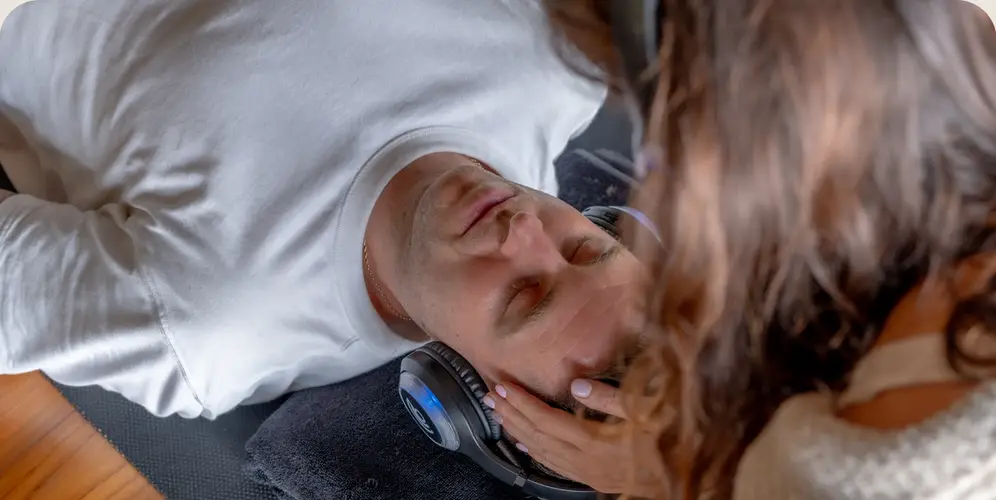
At Kora, I begin with slow nasal breathing, supported by music and spoken guidance through the 9D headphones. If your thoughts wander back to a worry, the guidance gives you something to return to. You can discuss the pace with me and ask for a pause as you go.
How slower breathing can help with anxiety
Your breathing and heart rhythm are connected through the autonomic nervous system, which helps regulate the body’s responses to stress and rest. Slowing the breath can influence that activity. Research on slow breathing has linked it with changes in heart-rate variability and greater relaxation.
For someone feeling anxious, the aim is to ease some of the physical arousal that comes with worry. Following a breathing rhythm also gives you a specific focus when your attention keeps returning to what might happen next.
A 2023 review of 20 trials measuring anxiety found a small average reduction in self-reported symptoms. These studies tested different breathing practices, rather than the complete 9D experience.
Read more about breathwork and anxiety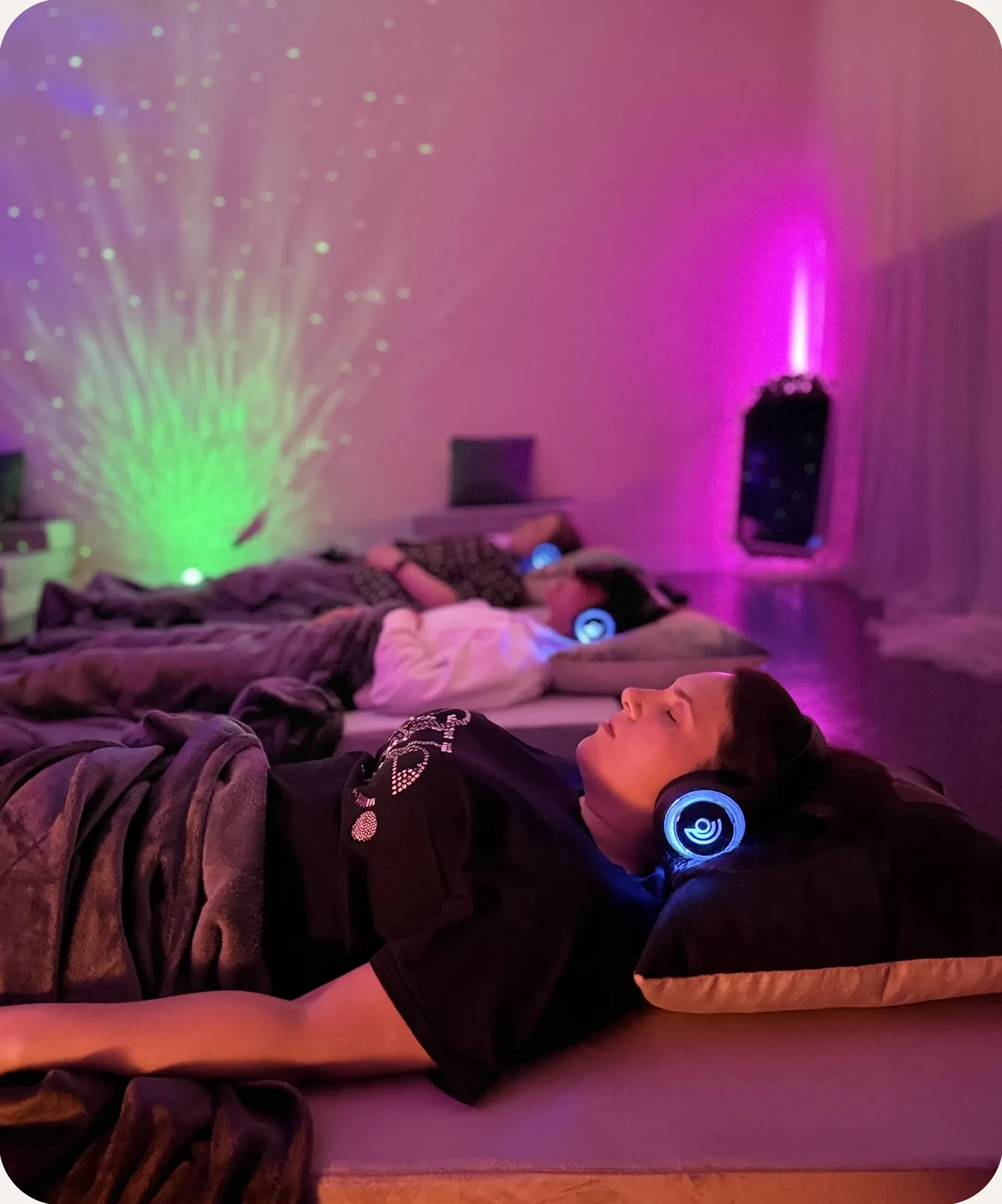
How I approach anxiety at Kora
I start with slower, down-regulating breathing. The 9D headphones provide music and spoken guidance, while I stay with you throughout the session. This gives you a way to practise with support when slowing down on your own feels difficult.
Spoken guidance to follow
The spoken guidance gives you something to follow when your attention returns to a worry. You can come back to the breathing rhythm without having to resolve every thought or explain your whole story.
A slower breathing pace
I begin with slow nasal breathing, with the aim of supporting relaxation. You have time to notice how the pace feels, with guidance available instead of having to work it out alone.
Talk through your concerns
Before starting, talk through anything that worries you about the session. We’ll agree on how to ask for a pause, and you can let me know if focusing on breathing has made you uncomfortable before.
What clients have shared
-
“I left the session feeling lighter, more relaxed and slept soundly.”
— Melissa Jane -
“For me it’s like exercising the mind and soul, practicing regularly to manage my depression and anxiety.”
— Belinda Taylor -
“Great experience starting to feel much calmer. Hayley that runs it is a beautiful kind caring lady that makes you feel comfortable and safe.”
— Lena Stojanovski -
“I really enjoyed the Stress & Anxiety session. I will most definitely be back for more sessions very soon.”
— Samantha Perez
More reviews (2) Fewer reviews
-
“Had the most relaxing time doing 9D breath work with Hayley. Highly recommend to de-stress!!”
— Billy Trenfield -
“I found that the hosts and process was supportive and the results really rewarding. I would recommend this to anyone who wants to experience their thoughts and face themselves in a deep and profound way.”
— Nik Hum
Questions about breathwork for anxiety
Can breathwork help with anxiety?
Research suggests breathing practices can reduce self-reported anxiety, with a small average benefit across studies. Slower breathing is one way to work with the physical arousal that can accompany worry. I use guided breathing with 9D audio; research on breathing practices does not yet establish how well the complete 9D format works for anxiety.
Is slower breathing the same as taking big, deep breaths?
No. Breathing more slowly and breathing more deeply are different things. I start with slow nasal breathing, rather than asking you to take the biggest breaths you can. We can discuss the pace together, especially if you tend to feel dizzy or uncomfortable when changing your breathing.
What if focusing on my breathing makes me more anxious?
Tell me before booking. Paying close attention to bodily sensations can feel uncomfortable for some people. We can discuss whether the format suits you and agree how to pause. During a session, let me know if anxiety is increasing rather than trying to push through it.
How often should I do breathwork for anxiety?
There is no single schedule that works for everyone. You can start with one session and notice how you feel during it and afterwards. Discuss that response with me before arranging more sessions; regular attendance is not a guarantee of improvement.
Can I attend while seeing a psychologist or taking medication?
Discuss this with me and your treating professional before booking so we can consider your circumstances and the proposed session. Keep your existing care and medication arrangements with your treating professional.
Where are sessions held, and how much do they cost?
Private sessions take place at 43 Wentworth Street, Port Kembla NSW 2505, near Wollongong. Availability, session duration and price are confirmed directly with me before booking. Email korawellness1@gmail.com or call 0404 470 951 to enquire.
Talk with me about your first session
I’m Hayley. If anxiety makes it hard to settle, or you’re nervous about trying breathwork, we can talk before you book. Tell me what you would like help with and what concerns you about the experience, so we can discuss a starting point together.
My studio is at 43 Wentworth Street, Port Kembla NSW 2505, welcoming people from Wollongong and across the Illawarra. We’ll agree on availability, duration and price before confirming your appointment.
Book a 1:1 session